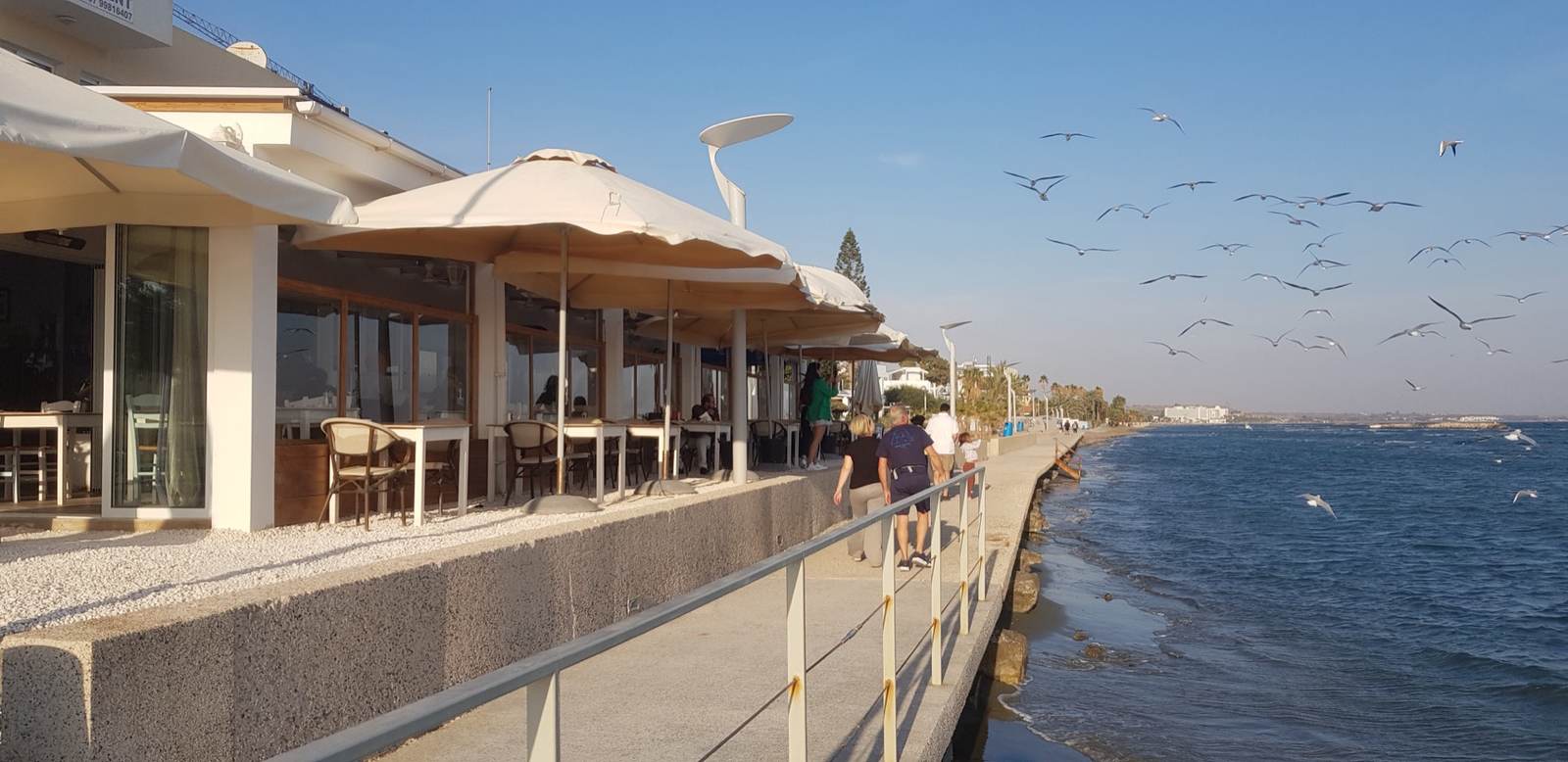
Every winter a few thousand greater flamingos fly in to spend the cold months on the lakes around Larnaca. You can watch them from the edge of the Salt Lake on the way in from the airport, or from a bird hide at Oroklini Lake, about a kilometre from our terrace on the Oroklini seafront.
When the flamingos arrive
The flamingos follow the rain. The Larnaca Salt Lake dries to a white crust in summer and fills again with the winter rains, and the birds come when the water brings food. In most years the first flocks land in November and the last ones leave around March. December to February brings the biggest numbers.
The dates move with the weather. On 8 December 2025 the Game and Fauna Service told RIK that a few hundred birds had reached Cyprus so far. If you are planning a trip around them, check the Cypriot news in late November. Local outlets report the first arrivals every year, often with photos from the Salt Lake.
Larnaca Salt Lake
The Salt Lake lies on the south side of town, between the city and the airport, and it holds the largest flocks in the area. It is a Ramsar wetland of international importance and part of the Natura 2000 network, protected in part for its winter flamingos. The birds feed on tiny brine shrimp in the salty water, and the pigment in the shrimp turns their feathers pink.
The easiest place to watch from is the western shore, near the Hala Sultan Tekke mosque. Park by the mosque and follow the earth path out into the lake. On a still January morning the flocks feed close enough that you can hear them. The path is unpaved and turns to mud after rain, so wear shoes you do not mind ruining. From Oroklini the drive takes about twenty minutes.
Oroklini Lake, a kilometre from our tables
Oroklini Lake is smaller, quieter and much closer to us. It sits south of Voroklini village, about nine kilometres from Larnaca town and a kilometre from the Oroklini seafront. The wetland covers 38 hectares and belongs to the Natura 2000 network. Birdwatchers have recorded around two hundred species here, many of them resting on migration.
A restoration project, LIFE Oroklini, started work in 2012. The team fenced the site to cut disturbance, managed the water levels and built small islands for nesting. In May 2023 the EU LIFE programme named it one of its best projects. Spring is the nesting season: stilts on long pink legs raise chicks on the islands, lapwings patrol the shore, and a diving duck that nests nowhere else in Cyprus brings its young out onto the water. In winter the flamingos wade through the shallows.
You have two places to watch from. An observation platform by the information kiosk on the north side looks over the northern part of the lake. A bird hide on the south side faces the larger basin and the nesting islands. The paths are flat and easy for children and older walkers.
How to watch without scaring them
Flamingos take off when people come too close, and every flight costs them energy they need for the winter. Stay on the paths and behind the screens. Keep dogs on a lead, leave the drone at home, and do not throw food. At the Salt Lake, binoculars make a big difference because the birds often stand far out. At Oroklini the hide brings you closer and a phone camera will do.
The light is best at the two ends of the day. Mornings are cool and still, and the water mirrors the birds. In late afternoon the light turns gold over the water. The middle of the day works for watching and less well for photos.
The numbers are falling. Monthly counts by the Game and Fauna Service and BirdLife Cyprus show a drop of 14 to 31 per cent since 2013. The service links the decline to drought, poor quality water running into the wetlands, and building pressure around them.
A morning of flamingos, then lunch by the sea
Our favourite winter plan starts at the Salt Lake at first light, stops for coffee in town, and reaches Oroklini Lake before noon. By one o'clock you can sit down at Mer Bleue with a bowl of fish soup, looking out at the same bay you drove along. The kitchen opens at nine, so the plan also works in reverse: flamingos first, then breakfast by the water.
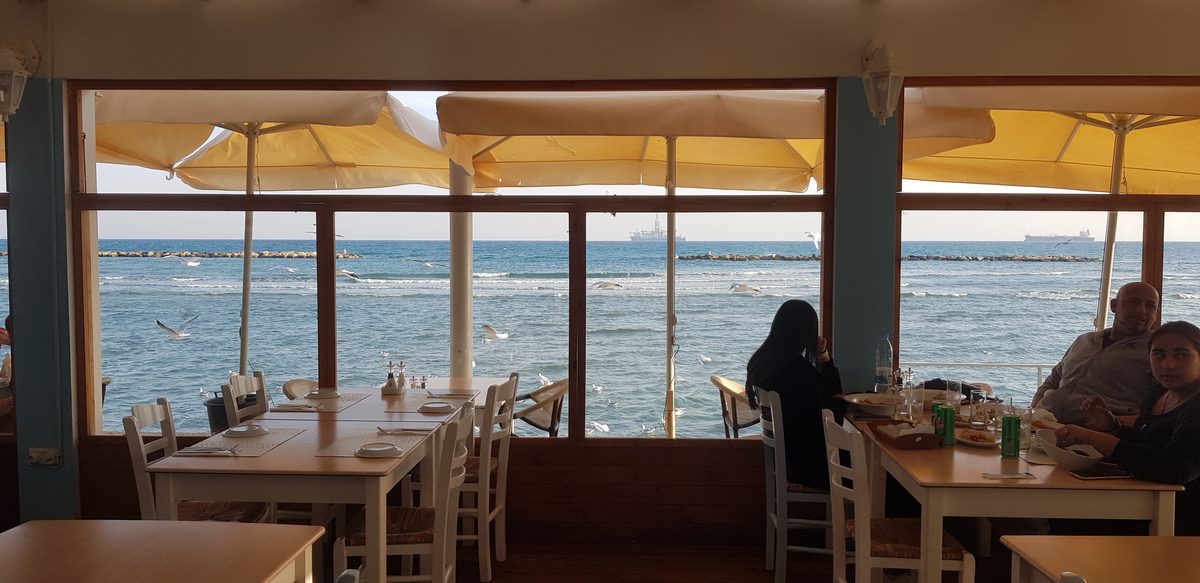
After an hour in a hide in January, you want something warm. The fish soup costs 10 euro, the grilled octopus 24, and the full fish meze 33 euro a head for tables of two or more. Look through the menu before you come, and book a table for weekend lunches. If the weather turns warm, and in Cyprus it often does, our guide to the Larnaca sea temperature tells you whether a swim is on.
Questions people ask
When can you see flamingos in Larnaca?
From about November to March. The biggest numbers come between December and February, and the arrival date depends on the winter rains filling the Salt Lake.
Where is the best place to see flamingos in Larnaca?
The Larnaca Salt Lake, near the Hala Sultan Tekke mosque, holds the largest flocks. Oroklini Lake, about a kilometre from the Oroklini seafront, is quieter and has a bird hide and a viewing platform.
Why are flamingos pink?
They eat tiny brine shrimp in the salty lake water, and pigments in the shrimp colour their feathers.
Are there flamingos at Oroklini Lake?
Yes, in winter. The lake is a Natura 2000 wetland where birdwatchers have recorded around two hundred species, including stilts, lapwings and many migrants.
Where can I eat near Oroklini Lake?
Mer Bleue Beach Restaurant sits on the Oroklini seafront, about a kilometre from the lake. It is open daily and the kitchen serves from 9:00 to 22:00.
Coming for the birds? See the terrace in the gallery or read our Oroklini Beach guide.